


This page is licensed under Creative Commons under Attribution 4.0 International. Anyone can share content from this page, with attribution and link to College MatchPoint requested.
UT Austin Early Action Results Are Out. Here’s Who Got In (and Why)
UT Austin Early Action decisions for the Class of 2030 are officially live as of today, January 15, 2026. We are thrilled to share the fantastic news we’ve already heard from the students we are lucky to work with, who were offered admission today! While this cycle marks the university’s second year of reinstated mandatory SAT/ACT scores, application outcomes continue to prove that academic strength alone is no longer enough to secure a spot in an increasingly competitive applicant pool. These results reinforce that for competitive programs, "Major-to-Fit" alignment, the clear connection between a student's extracurricular initiative and their chosen field, remains the primary differentiator for students who dream of being Longhorns.
Join our upcoming webinar with UT experts Molly Gully and Allyson Randall to get inside these results and learn how to prioritize your student's path to the Forty Acres.
Early Action results are the clearest signal of how UT Austin defines readiness. This year’s outcomes reveal a consistent pattern: UT is no longer rewarding academic strength alone; it is rewarding preparation that clearly aligns with a student’s first-choice major. Once you understand this "Major-to-Fit" philosophy, many of the most confusing decisions begin to make sense.
Why were some students surprised by their Early Action result?
Early Action results can feel confusing if families expect grades or test scores to carry the application. Decisions make much more sense when you look for these four common disconnects:
- Academic Mismatch: Students often select highly competitive majors, like those in McCombs or Cockrell, without the specific advanced coursework (such as AP Calculus BC or AP Physics C) that signals readiness.
- The "Scattered" Resume: Many applicants present resumes filled with impressive, high-level activities that point in multiple directions. UT rewards "Major-to-Fit" depth in the expanded resume, prioritizing students who show sustained initiative in 3–4 core areas related to their first-choice major.
- Abstract Writing: While many essays are well-written, they often remain abstract, describing a general love for a subject. The strongest applicants use their Short Answers to show—not tell—how they have already explored their field through internships, self-directed projects, or independent research.
- Hidden Impact: Resumes frequently list involvement without making growth or ownership easy to see. UT readers look for "impact over hours," specifically seeking out students who have initiated change, led a team, or solved a tangible problem.
Many families were surprised by Early Action results this year because
strong academics alone did not separate students in an exceptionally deep applicant pool. Some applications looked impressive on paper but lacked a clear throughline that explained why a
specific major at UT Austin made sense for that student right now. In contrast, the students who were offered admissions in this Early Action window presented cohesive applications that demonstrated readiness, purpose, and intentional alignment across coursework, activities, essays, and the expanded resume. Admissions readers could quickly understand not just what these students had done, but how their experiences pointed toward meaningful contributions in their chosen field. In a cycle defined by volume and selectivity, clarity and alignment were often the difference between expectation and outcome.
Does Your Student’s Plan Align With UT’s 2026 Decisions?
Navigating UT’s evolving admissions landscape doesn't have to be overwhelming. We’re here to help you gain clarity on today's results and confidence in your student's unique path for the years ahead.
What does fit to major actually mean at UT Austin?
At the University of Texas at Austin, your first-choice major is the foundation of your entire application. "Fit to major" is not about choosing the right buzzwords; it is about showing a pattern of interest, growth, and action over time. UT readers look for a natural progression from curiosity to involvement, and ultimately, to initiative and impact.
Admissions officers aren't looking for prestige; they are looking for relevance and continuity. In our work with students, we focus on the "3-4 Rule"—developing a handful of core areas where a student is deeply engaged.
- Business (McCombs): You don't need to start a company to be competitive. UT expects to see quantitative readiness (like AP Calculus) and evidence that you understand organizational systems. This might show up through managing a budget for a fundraiser, reselling on eBay, or taking on financial oversight at a part-time job.
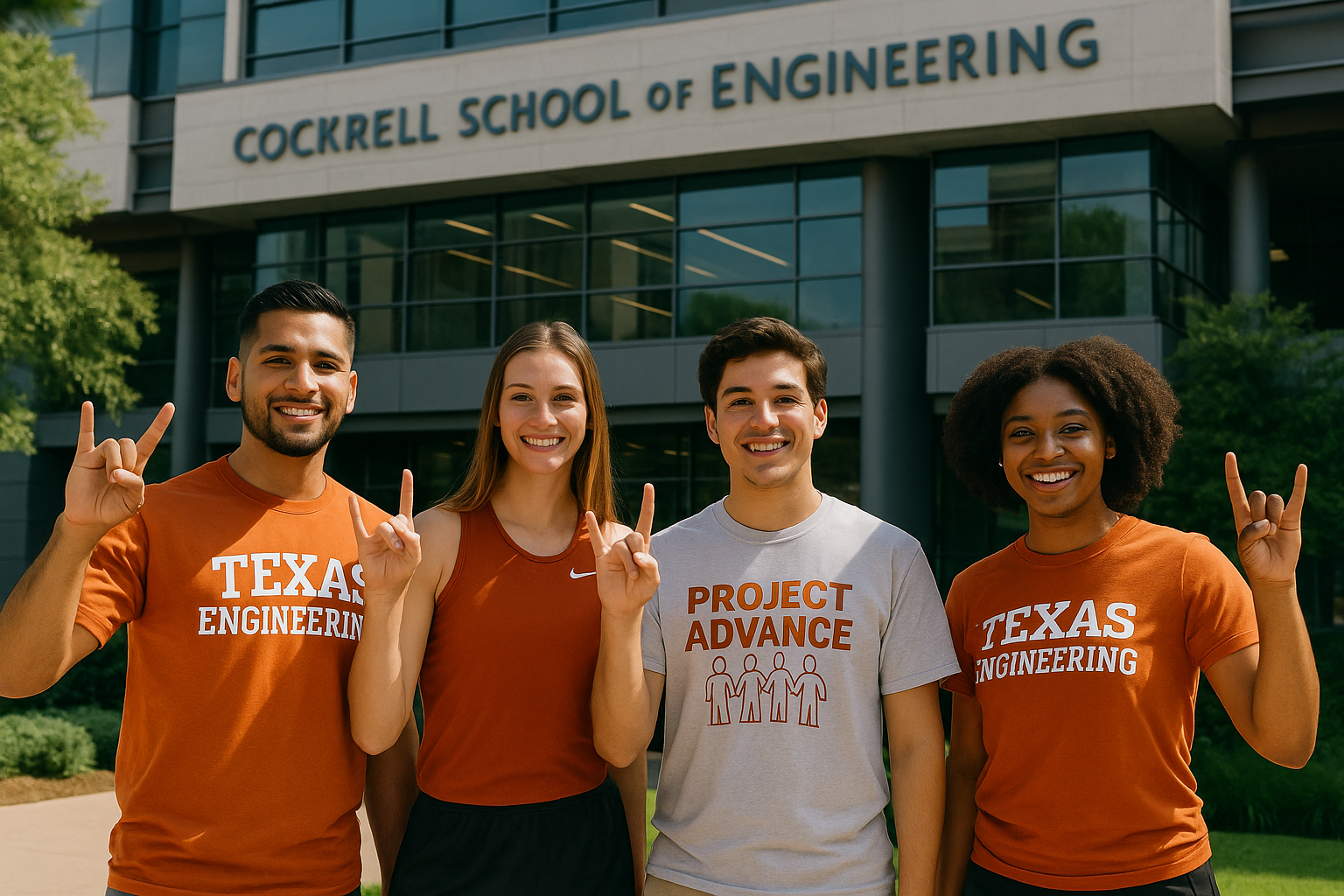
- Engineering (Cockrell): Successful applicants demonstrate mastery in math and science—specifically AP Physics C and Calculus BC—and apply those skills outside the classroom. Readiness is proven through robotics, CAD certifications, or hands-on mechanical projects pursued consistently.
- Computer Science: Fit is shown through building and experimenting. Beyond high grades, UT looks for independent coding projects, hackathon participation, or self-driven learning in Java or Python that results in a tangible product like an app or website.
- Health Professions: UT responds to a clear pattern of caregiving and scientific curiosity. This includes volunteering in clinics, earning certifications (like CPR or EMT), or providing long-term care for family members.
For the Longhorns we've worked with, summer is the most critical window for demonstrating the initiative UT rewards. The university pays close attention to how students use unstructured time when no one is assigning the work. The most compelling summers extend the student's story through jobs with real responsibility, internships, research, or self-directed projects. Reflection is the final piece: a student must be able to articulate why they chose their summer path and how it shaped their academic goals.
How does UT Austin really evaluate applicants academically?
UT Austin does not admit students to the university as a whole; it admits them to specific majors. This distinction is the most important factor for families to understand. Every application is reviewed through one central lens: Will this student succeed in their chosen academic program from the first day on campus?.
While grades and test scores remain the foundation, they are interpreted in context:
- Target Benchmarks: Successful applicants to this year's Early Action roubd typically had a 3.–4.0 unweighted GPA and test scores of 1400+ (SAT) or 32+ (ACT).
- Major-Specific Rigor: UT looks for specific class choices, such as AP Calculus for Business and Engineering or AP Biology/Chemistry for Health Professions .
- The AP/IB Signal: Admissions officers use your High School Profile to see if you maximized the most challenging courses available to you, specifically looking for AP or IB core subjects.
- Intentionality: Transcripts that feel focused and intentional rise, while "scattered" profiles—even those with high stats—often struggle to stand out.
In our work with students this cycle, we have seen that many Early Action applicants were academically accomplished, yet did not receive an offer of admission. What separated outcomes was not effort or intelligence; it was alignment. In a year of record-breaking application volume, UT is not projecting "future potential"; it is admitting students whose major-specific preparation is already evident.
Your Roadmap to the Forty Acres and Beyond
Early results are in from more than 200 colleges, and we are celebrating alongside the students we have been fortunate to support. Already, they have earned admission to more than 100 highly selective institutions, including Brown, Michigan, NYU, Miami, UVA, Rice, Tulane, Johns Hopkins, Trinity, and Georgia Tech. These outcomes reflect what we see again and again in today’s admissions landscape. Students who lead with authenticity, show depth in how they spend their time, and make intentional choices about academics, activities, and growth give colleges a clear picture of who they are and how they will contribute once they arrive.
You May Also Be Interested In These Resources

What does UT Austin look for in extracurriculars? Learn how depth, initiative, impact, and fit to major can strengthen your student's profile.

For decades, the University of Texas at Austin has been the dream school for many Texas families. With its nationally ranked programs, strong alumni network, and unbeatable Austin location, it is no surprise UT remains one of the most sought-after public universities in the country. But in 2026, with over 100,000 applications submitted and rising selectivity across nearly every major, it is important to pause and ask: Is UT Austin still the right fit for your student?
Your student took advanced classes, earned excellent grades, stayed active in school clubs, volunteered on weekends, and maybe even scored above a 1450 on the SAT. They hit every benchmark. Their college list was thoughtful. UT Austin was the top choice. And still, they were denied. This story is more common than many people realize. Each year, UT Austin turns away thousands of highly qualified applicants.

At The University of Texas at Austin, what you list as your second-choice major is not just a backup plan. It is a real part of your application strategy. In fact, for many students who are not automatically admitted through the top 5% rule, that second-choice major could be the difference between an offer and a denial. But it only works if you approach it with intention. UT does not view the second-choice major as a throwaway. It still gets reviewed through the same holistic process. If you choose it wisely and align your application materials accordingly, it can open another door into one of the most competitive public universities in the country.

The 2025 admissions cycle revealed something parents and students can no longer afford to overlook: colleges are not just evaluating students. They are building classes that reflect a carefully designed set of institutional priorities. While your teen may have done "everything right," the schools they applied to were also weighing factors well beyond grades and test scores. Understanding these factors is key to helping families navigate the process with less stress and more clarity.

If your teen isn’t in the top 5% of their class, you’ve probably heard some version of this: “There’s no way they’ll get into UT.” It’s a myth we hear all the time—and it’s simply not true. Yes, UT Austin is more competitive than ever. With over 90,000 applicants for the Class of 2025 and an admit rate of just 24% , the numbers tell a clear story. And for students who are not in the top 5% , the odds drop even further: the admit rate for non-auto-admit students was just 11% .

By the spring of sophomore or junior year, many parents feel a quiet panic set in. Conversations with other families get louder. Group chats fill with testing plans and summer programs. Someone mentions a college counselor or a perfect score, and suddenly, it feels like everyone else started earlier and did more. The question parents ask us most often this time of year is simple and heavy. Are we already behind?

Many families believe being in the top 5% makes UT Austin a sure thing. It does not. Auto admit guarantees admission to the university, not to competitive majors like engineering, business, or computer science. Each year, top 5% students are denied their intended major because they misunderstand how UT actually works. See what this year's UT admissions decisions reveal about major-level selectivity.

Many UT Austin denials are not about grades, effort, or intelligence. They are about direction. UT admits by major, not by student. When an application lacks a clear fit to major, even strong students can quietly fall out of contention. Learn how to build a fit-to-major case admissions officers cannot ignore in our UT Results Webinar.