
This page is licensed under Creative Commons under Attribution 4.0 International. Anyone can share content from this page, with attribution and link to College MatchPoint requested.
8 Predictions for College Admissions In 2026… And One Certainty
If you are the parent of a teenager, you already know this:
College admissions is NOT what it was when you applied. It is NOT even what it was five years ago.
The rules keep changing while you are trying to guide your student through high school.
At ESM Prep College MatchPoint, we work with
hundreds
of families each year. These 8 predictions highlight what we expect to see in 2026 and how families can respond with
clarity
rather than fear.
Our goal is to help you feel less overwhelmed and
more prepared.
Key Takeaways
- College admissions have become more selective and more data-driven, even at schools that families once viewed as reliable options.
- Test-optional policies now favor students with strong scores, especially in competitive majors and early application rounds.
- Flagship public universities and popular Southern schools are seeing a surge in demand, reshaping what counts as reach, match, and safety.
- Clear strategy, early planning, and student well-being matter more than ever in a process that rewards focus over volume.
KEY TAKEAWAY #1
Test Optional Will Shift to “No Score, No Advantage” in a World of Straight As
For the past few years, families have heard that tests "do not matter." In 2026, the data tells a different story. In an era of rampant grade inflation, thousands of applicants now present near-perfect transcripts. In that crowded field, SAT and ACT scores have returned as one of the few consistent signals colleges use to verify academic strength.
The Data: At Boston College, students submitting test scores were admitted at a rate of roughly 28%, compared to just 17% for non-submitters. At Emory University, the admission rate for applicants who submitted scores was 17%, compared with 8.6% for those who did not.
Why It Matters: "Test-optional" does not mean "test-blind." Families who assume tests are obsolete are competing against students who treat testing as a strategic asset to unlock merit aid and selective majors.
Your Move:
- 11th Grade: Finalize a testing plan now: choose your test, lock in two dates, and commit to weekly prep.
- 10th Grade:
Finish Algebra by the end of the year to ensure you are ready for 11th-grade testing.
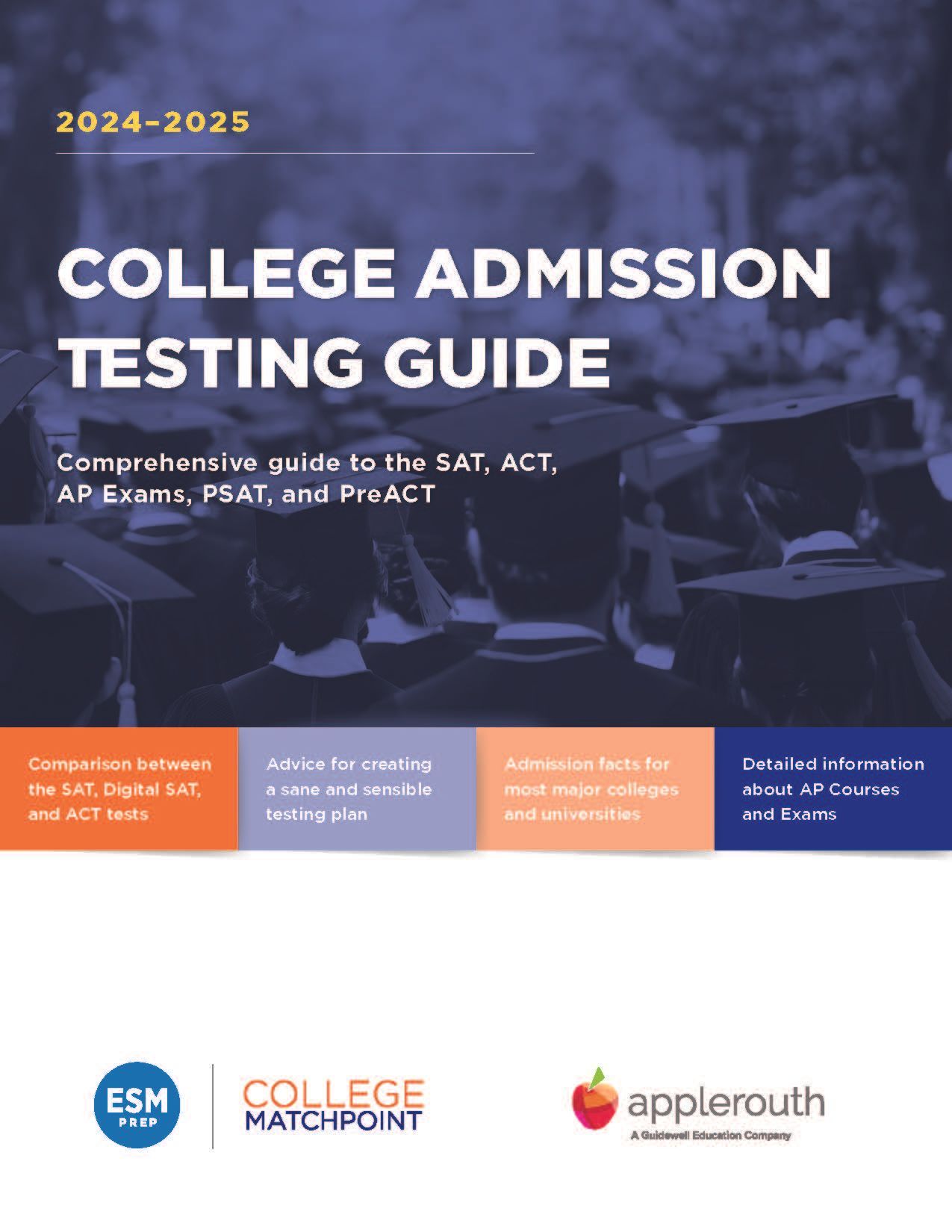
Conquer the College Admission Testing
This comprehensive guide empowers families with expert insights on today's complex standardized testing landscape. It addresses critical questions about test-optional policies, digital SAT transitions, and strategic testing timelines that directly impact college admissions outcomes. The guide covers personalized testing strategies, accommodation application processes, and essential information about SAT, ACT, PSAT, and AP exams.
KEY TAKEAWAY #2
Applying Early Will Become the New On Time for College Admissions
Applying "Early Action" or "Early Decision" is no longer a niche tactic for the eager; it is the minimum requirement to stay in the game. Students who wait for Regular Decision are stepping into the most crowded round with the fewest available seats.
The Data: Many selective colleges now fill more than 70% of their class through Early Action and Early Decision. Colleges such as Middlebury, Bates, and Bucknell illustrate the trend: they fill roughly two‑thirds to four‑fifths of the class early, while early admit rates can be 2–4 times higher than Regular Decision.
Why It Matters: The math is unforgiving. Early applicants gain first access to competitive majors like business, engineering, and CS. Waiting until January often means fighting for the leftovers.
Your Move:
- 11th Grade: Draft the personal statement and activity list by mid-July. You must be ready to submit by early October (for some schools by late August).
- Strategy: Decide by August if an Early Decision commitment aligns with your financial and academic reality.
KEY TAKEAWAY #3
UCLA, UT Austin, and Georgia Tech Will Be
Harder
to Get Into
Than Many Ivy
League Schools
The era of the safety flagship is over. For many students, especially those applying from out of state or into selective majors, top public universities now rival or exceed the competitiveness of elite private colleges. What once felt like a reliable option has become one of the hardest admits on a student’s list.
The Data: For many out‑of‑state applicants, these flagships are now as hard—or harder—to crack than some Ivy League campuses, ending the era of the ‘safety’ flagship. At UCLA, overall admission rates have hovered around 9 percent in recent cycles, lower than several Ivy League schools. For out of state applicants, the admit rate is typically in the low single digits. UT Austin tells a similar story. While the overall admit rate appears higher on paper, non Texas residents often face admit rates below 10 percent, and far lower for competitive majors like business, engineering, and computer science.
Why It Matters: Admission is no longer about just liking the campus. It is about proving you can handle the rigor of a specific major. "General interest" is not enough for engineering or business programs.
Your Move:
- 11th Grade: Finalize one or two likely majors. Ensure your essays and activities demonstrate real preparation, not just curiosity.
- 10th Grade:
Choose next year's classes with a major in mind—especially in math and science.
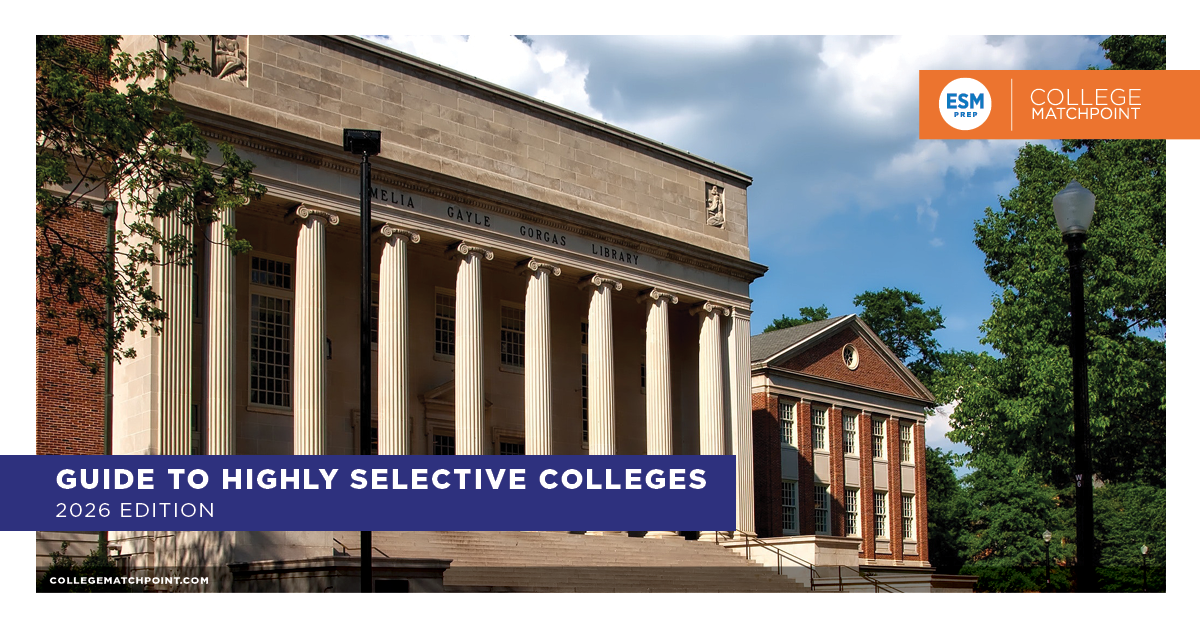
Download Our Guide to Highly Selective Colleges
Applying to highly selective colleges can be daunting, but this guide discusses what these colleges look for and how to stand out as an applicant.
KEY TAKEAWAY #4
Southern Universities Will Become the New First Choice Schools Nationwide
Families on both coasts are quietly shifting their attention south. Schools like Georgia Tech, Vanderbilt, Clemson, and SMU are drawing record interest due to a winning combination: academic rigor, booming local economies, and superior ROI.
The Data: Since 2021, applications to Southern public universities from the Northeast and Midwest are up roughly 30%, and the South is the only region posting ~4% year‑over‑year enrollment growth, evidence that Southern campuses are becoming first‑choice destinations for students nationwide. For example, Early Action applications to the University of Georgia have increased by more than 40% over the last 3 years.
Why It Matters: For many high-achieving students, these schools are no longer "backups"—they are first-choice targets. The competition for spots is heating up fast.
Your Move:
- Strategy:
If you have your heart set on a Southern flagship, make sure your final college list is balanced by including at least 2-3 less selective "match" colleges you would be happy to attend.
KEY TAKEAWAY #5
AI Will Review Most Applications Before a Human Ever Reads Them
As application volume explodes, admissions offices are automating the triage process. In many offices, algorithms now score, sort, and flag files long before a human ever opens the application.
The Data: More than 80% of admissions offices expect to use AI or predictive analytics in their review process. At volume‑heavy campuses like Virginia Tech, AI now pre‑screens tens of thousands of essays and transcripts, saving thousands of staff hours and effectively becoming the first ‘reader’ for the entire applicant pool
Why It Matters: If AI performs the first sort, a "messy" application becomes low priority. Disorganized activity lists or unclear major fits get flagged as weak signals. Clean, coherent stories rise to the top.
Your Move:
- 11th Grade: Build a clear academic and activity story that aligns with one or two likely majors.
- Strategy:
Ensure your transcript, activities, essays, and recommendations all tell different angles of the same story.

Download Our Guide to Writing Authentic College Essays that Beat the AI Bot
Beat the AI bots. This guide equips students to write an authentic essay showcasing their unique personality, values, and experiences by tapping creativity, mining memories, and connecting passions to goals.
KEY TAKEAWAY #6
Activity Stacking Will Stop Working in High School
“Activity stacking,” long lists of shallow, unrelated activities, now carries far less weight than families expect. Admissions teams are not counting how many clubs a student joins. They are evaluating how deeply a student engages, how long they stay committed, and how clearly their interests align with their academic rigor. Depth plus rigor tells a stronger story than volume ever did.
The Data: Admissions leaders consistently rank academic rigor and sustained extracurricular engagement far above the sheer number of activities or service hours. Data from the National Association for College Admission Counseling (NACAC) shows that colleges prefer students who demonstrate depth and long-term commitment in a few meaningful areas rather than those who spread themselves thin across many unrelated activities.
Why It Matters: The old "do everything" playbook creates burnout and bland applications. Colleges want to build well-rounded classes, not admit well-rounded students. They are looking for depth and "edges," not just checked boxes.
Your Move:
- 11th Grade: Build a focused activity plan that highlights depth. Turn one interest into something visible, like a project or publication.
- 10th Grade:
Drop one activity that adds stress and start one commitment that would matter even if no college ever saw it.

Download Our Guide to Activity Planning
Successful college applicants engage in activities based on their interests and strengths. This guide walks through our i4 framework to optimize extracurricular involvement.
KEY TAKEAWAY #7
Politics Will Quietly Become a Deal Breaker in College Lists
This is the trend most parents do not see coming. Students are quietly filtering colleges based on state policies and social climate before they even look at academic rankings.
The Data: Nearly one‑third of prospective students say they’ve removed at least one college from their list for political reasons, and about 1 in 6 refuse to attend an otherwise ‘perfect’ school if the state’s politics clash with their beliefs. Recent studies show students on both the left and right are willing to pay over $2o,000 more in tuition to attend a college where fewer classmates hold opposing political views.
Why It Matters: Values fit is no longer a finishing touch; it is shaping lists from the beginning. Families who fail to talk openly about this may find themselves in a last-minute scramble when a student rejects an entire region.
Your Move:
- 11th Grade: Ask directly which states or regions feel off-limits and why. It is better to know now than in the spring of senior year.
KEY TAKEAWAY #8
International Admissions Will Split Into Two Tiers Across the Globe
International admissions is experiencing a major reset. Interest in many U.S. campuses has cooled sharply, with applications from key countries dropping 14% this year. The result is a strange paradox. Top global brand universities are hotter than ever and surging in demand, while many U.S. colleges quietly must dig deeper into their waitlists just to fill their classes.
The Data: More than one in four selective U.S. colleges reported higher waitlist activity this cycle because international yield declined.
Why It Matters: The most famous global names will only get more cutthroat, especially in engineering and computer science. At the same time, a wide band of excellent colleges now has more room for strong international applicants than they did a year ago.
Your Move:
- 11th Grade:
When finalizing your college list, evaluate which states or regions feel off-limits and why. It is better to know now than in the spring.
ONE CERTAINTY
Your Student’s Well-being Will Matter More Than Any Other Factor
Amid all these changes, one truth remains steady. Thriving in high school and thriving in college admissions are deeply connected. More than half of teenagers say college admissions is the most stressful part of high school. National teen surveys consistently show that roughly eight out of ten students experience significant pressure related to school and grades. Left unchecked, that pressure can narrow thinking, drain motivation, and quietly limit a student’s ability to show who they really are.
When students are supported in healthy, sustainable ways, the opposite happens. They think more clearly, manage their time with greater confidence, and engage more fully in their classes and activities. They write more authentic college application essays. They participate more thoughtfully in summer jobs or independent projects. They build stronger relationships with teachers and mentors. These are the qualities that help students thrive in high school and carry forward into college.
Families have more influence here than they often realize. When parents help create steady routines and remove unnecessary pressure, students feel grounded and capable. That sense of stability becomes a competitive advantage in the admissions process. A student who is thriving is more compelling on paper and in person than a student who is running on fumes. Burnout does not just affect mood. It shows up in grades, writing quality, recommendations, and decision-making.
How to support your student this year
- Simplify their schedule: Thriving students are not doing everything. They are doing the right things with intention. Colleges consistently value depth, consistency, and growth over overloaded calendars. Help your student focus on commitments that matter and step away from activities that add stress without purpose.
- Protect real rest: Rest is not a reward for finishing work. It is part of the work. Sleep and true downtime support learning, creativity, and emotional regulation. Students who rest well perform more consistently, communicate more confidently, and handle challenges with resilience, both in high school and in college.
- Build consistent planning routines: Thriving students feel a sense of control over their time. Simple weekly planning check-ins reduce anxiety and prevent last-minute pressure. These routines build independence and executive function skills that are essential for college success.
- Normalize conversations about stress and pressure: High school students often assume they should handle everything on their own. Open, judgment-free conversations help students process pressure before it becomes overwhelming. Feeling understood allows students to take healthy risks, stay engaged, and grow with confidence.
Thriving in college admissions is not about pushing harder. It is about creating the conditions where students can grow, stay well, and show up fully as themselves. That foundation supports success now and long after acceptance letters arrive.
Trusted by Families Like Yours
"Working with College MatchPoint made us feel supported, empowered, and relieved—our kids didn’t just get into great schools, they found the perfect places to thrive."
— KRISTEN COWDEN, Parent Class of 2021, 2023, 2025