
We have a unique approach at College MatchPoint. It all begins and ends with our ultimate goal: for our students to thrive in their selected college.

  The college application process can feel overwhelming, no matter how strong the student. But at College MatchPoint, we believe it should be organized, personal, and even fun, and we provide a framework that reduces the stress throughout the journey. 

DOWNLOAD OUR GUIDE TO
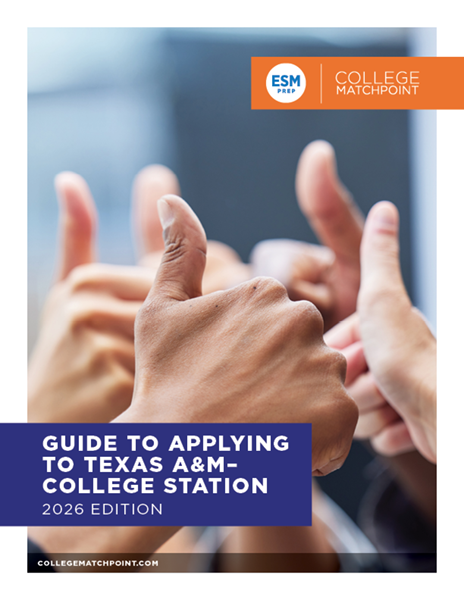
Applying To Texas A&M University

This year, we’re excited to share the first edition of our College MatchPoint Guide to Applying to Texas A&M. The school has seen more than 20% increase in applications over the last 3 years, with engineering majors assuming a national profile. This guide covers all required essays, as well as providing detailed information on the resume, evaluating fit-to-major, and honors programs.

You might also be interested in these resources!


By Abby Hofmeister January 17, 2026
Nursing is one of the most in-demand and rewarding career paths, but finding the right college program can feel overwhelming. From competitive BSN programs to flexible ADN pathways, the options vary widely. Our latest guide breaks down top nursing programs, admissions requirements, and key factors to consider when choosing a school. Whether you're aiming for a reach school or looking for the best fit, we've got you covered. Explore the full guide and take the next step toward your nursing career.
By Abby Hofmeister January 17, 2026
Is your bright, capable teen struggling to reach their potential in school? You may notice their backpack overflowing with crumpled papers, completed assignments that never make it to the teacher's desk, or the last-minute panic when they realize a major project is due tomorrow. These aren't likely signs of laziness or lack of intelligence—they could indicate executive function challenges.
By Abby Hofmeister January 17, 2026
Academic challenges are inevitable for all students, but for neurodivergent learners, these obstacles can feel particularly daunting, especially as the pace picks up in the spring semester. Educational experts recognize that these moments of struggle are actually valuable opportunities for growth. James Nottingham's concept of " The Learning Pit ” describes how students must sometimes journey through confusion before emerging with deeper understanding. When students climb out of this pit themselves, they develop the resilience essential for long-term academic - and life - success. The key is providing them with the right tools to navigate this journey independently.
By Abby Hofmeister January 17, 2026
Starting the path to medical school begins in high school. Students interested in becoming doctors should focus on excelling in science and math classes, while also developing strong writing and communication skills. Gaining hands-on experience by volunteering in healthcare settings, participating in research, and serving the community will help build a solid foundation for a future in medicine. Taking on leadership roles in clubs or sports helps develop the teamwork and decision-making skills that are crucial for medical school.
By Abby Hofmeister January 17, 2026
Early admissions results from the 2024-25 cycle reinforce a crucial reality—colleges are moving away from rewarding long lists of superficial extracurriculars. Highly selective institutions, including public universities like the University of Michigan and UCLA, as well as private colleges like Stanford and MIT, are prioritizing applicants who show depth, initiative, and impact over those who simply check boxes. As competition intensifies for admission to top programs in computer science, engineering, business, and the sciences, students who spread themselves too thin across numerous activities are being left behind. Instead, colleges seek students whose extracurriculars tell a compelling, cohesive story of intellectual engagement and long-term commitment.
By Abby Hofmeister January 17, 2026
Early admissions results from this year confirm what many families already suspected—highly selective majors are becoming even more competitive. Computer science, engineering, business, and nursing continue to be among the most selective fields, with acceptance rates often lower than those of the overall university. Meanwhile, sciences like biology and chemistry remain difficult to enter, particularly at research-focused institutions. Public universities such as the University of Michigan, Georgia Tech, and the University of Texas at Austin are seeing record-low acceptance rates for these high-demand programs, while elite private colleges like Stanford, MIT, and Wharton at the University of Pennsylvania are admitting only a small percentage of applicants to their top programs. Colleges are not just looking for students with strong grades and test scores; they want to see applicants who have already demonstrated a deep commitment to their intended major. Through extracurricular activities, students must show that they are not only interested in a field but have actively engaged with it in meaningful ways.