
This page is licensed under Creative Commons under Attribution 4.0 International. Anyone can share content from this page, with attribution and link to College MatchPoint requested.
The A+ Epidemic: Navigating High School Grade Inflation in 2026
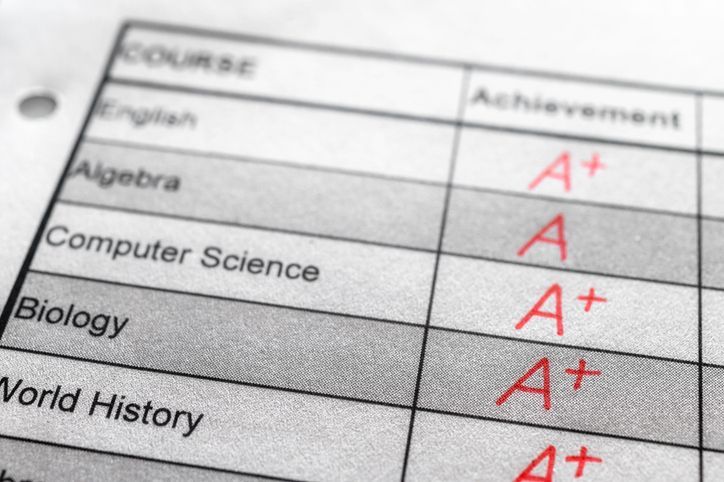
High school grades continue to rise, but college outcomes tell a more complicated story. Over the past decade, average GPAs have steadily climbed, and by the mid 2020s, the vast majority of high school students were earning mostly As and Bs in core academic subjects. On paper, students look stronger than ever. In practice, colleges are finding it harder to distinguish who is truly prepared for the academic demands ahead.
This disconnect is not about effort or motivation. Today’s students work hard. But the meaning of an A has shifted, and admissions offices know it.
What Does This Mean for Your Student?
For families, higher grades can feel reassuring. A strong GPA still matters, but it no longer answers the most important admissions question, which is whether a student can thrive in a specific college classroom.
Parents are often asking:
- Do these grades reflect deep learning or completion of requirements?
- How do colleges compare students from schools with very different grading practices?
- What actually signals readiness when so many students look similar on paper?
These are fair questions, and they are the same ones admissions officers are asking behind the scenes.
Why Grade Inflation Has Continued
Several forces have pushed grades upward over time, and most are well-intentioned.
More students are enrolled in honors, AP, IB, and dual enrollment courses, many of which use weighted grading scales that lift GPAs. Mastery based grading has become more common, allowing revisions and retakes until students reach proficiency. Schools also face real pressure to show positive outcomes, including graduation rates and college acceptances. Pandemic-era policies added another layer, normalizing flexible deadlines and more generous grading that never fully reverted.
None of this means schools are doing something wrong. It does mean that GPA alone has become a blunt instrument.
The Widening Gap Between Grades and Academic Readiness
While grades have risen, national measures of academic readiness have not kept pace. SAT and ACT scores declined through the early 2020s and have only partially stabilized. A significant share of students still do not meet college readiness benchmarks, even as their report cards look strong.
Colleges see this gap clearly. High grades do not always translate to strong reading stamina, analytical writing, or college level math skills. As a result, admissions teams are relying more heavily on context and corroborating evidence.
How Colleges Are Responding in 2026
Admissions offices are not ignoring grades, but they are reading them differently.
Course rigor matters more than ever. Colleges want to see how a student challenged themselves within the options available at their school. An A in an advanced course often carries more weight than a perfect GPA built on lighter choices.
Context is critical. Admissions readers look closely at school profiles, grading distributions, and historical patterns from each high school.
Testing is regaining influence at some institutions. While many colleges remain test-optional, a growing number now recommend or require scores again, particularly for competitive majors. Tests provide a common reference point when grades vary widely.
Essays and sustained involvement matter more. When grades cluster at the top, colleges look for evidence of intellectual curiosity, initiative, and follow through. Depth consistently matters more than volume.
How Parents Can Support Students Right Now
The goal is not to chase perfection. It is to help students build real readiness and real options.
Encourage thoughtful course selection. Rigor, balance, and fit matter more than stacking the hardest schedule possible at all costs.
Shift the focus from grades to growth. Strong writing, problem solving, and study habits will matter far beyond high school.
Support meaningful involvement. Colleges respond to students who invest deeply in a few activities and show impact over time.
Keep perspective. Admissions decisions are shaped by context, not just numbers. A transcript tells part of the story, not the whole one.
The Bottom Line
An A is still an achievement. But in 2026, it is not a guarantee. Colleges are looking past surface level success to understand how students learn, adapt, and engage.
When families understand this shift, the process becomes less stressful and more strategic. The goal is not to win the GPA race. It is to help students arrive at college ready to thrive once they get there.
If you want help thinking through course choices, testing strategy, or how your student’s transcript will actually be read, our team is here to help.
Impact on College Admissions
A high GPA alone may no longer be enough to stand out. With so many students achieving high grades, colleges are looking for additional ways to differentiate applicants. This means that even straight-A students need to demonstrate other qualities and achievements to be competitive.
Colleges are looking more closely at course rigor, extracurricular activities, and essays. They want to see that students have challenged themselves with advanced courses and have developed interests and skills outside the classroom. Essays are becoming increasingly important as a way for students to showcase their unique perspectives and experiences.
Some schools are returning to requiring standardized test scores, seeing them as a more consistent measure across different high schools. While there was a trend towards test-optional policies, especially during the pandemic, some institutions are reversing this due to concerns about grade inflation. These scores can provide a standardized benchmark that grades alone may no longer offer.
How You Can Support Your Teenager
As we navigate these changes in education, it's crucial to keep the big picture in mind. While good grades are important, they're just one part of your child's educational journey. The skills, knowledge, and character they develop during high school are what truly prepare them for future success.
Here are some ways to help your student navigate their high school years:
1. Encourage challenging courses: Even if it means slightly lower grades, the rigor will be appreciated by colleges.
2. Foster a love of learning: Help your child focus on acquiring knowledge and skills, not just achieving high grades.
3. Support well-rounded development: Encourage meaningful extracurricular activities and personal projects.