
This page is licensed under Creative Commons under Attribution 4.0 International. Anyone can share content from this page, with attribution and link to College MatchPoint requested.
Not All "Learning Support" Is Created Equal: Decoding the 4 Levels of College Assistance
"Does this college have learning support?"
We hear this question from parents every day. It seems like a simple "yes" or "no" question, but in the landscape of higher education, the answer is often "it depends."
Securing the right academic assistance for a learning-different student means understanding a spectrum of offerings. "Learning support" is a broad term that can range from a drop-in writing center to a dedicated specialist who meets with your student every morning.
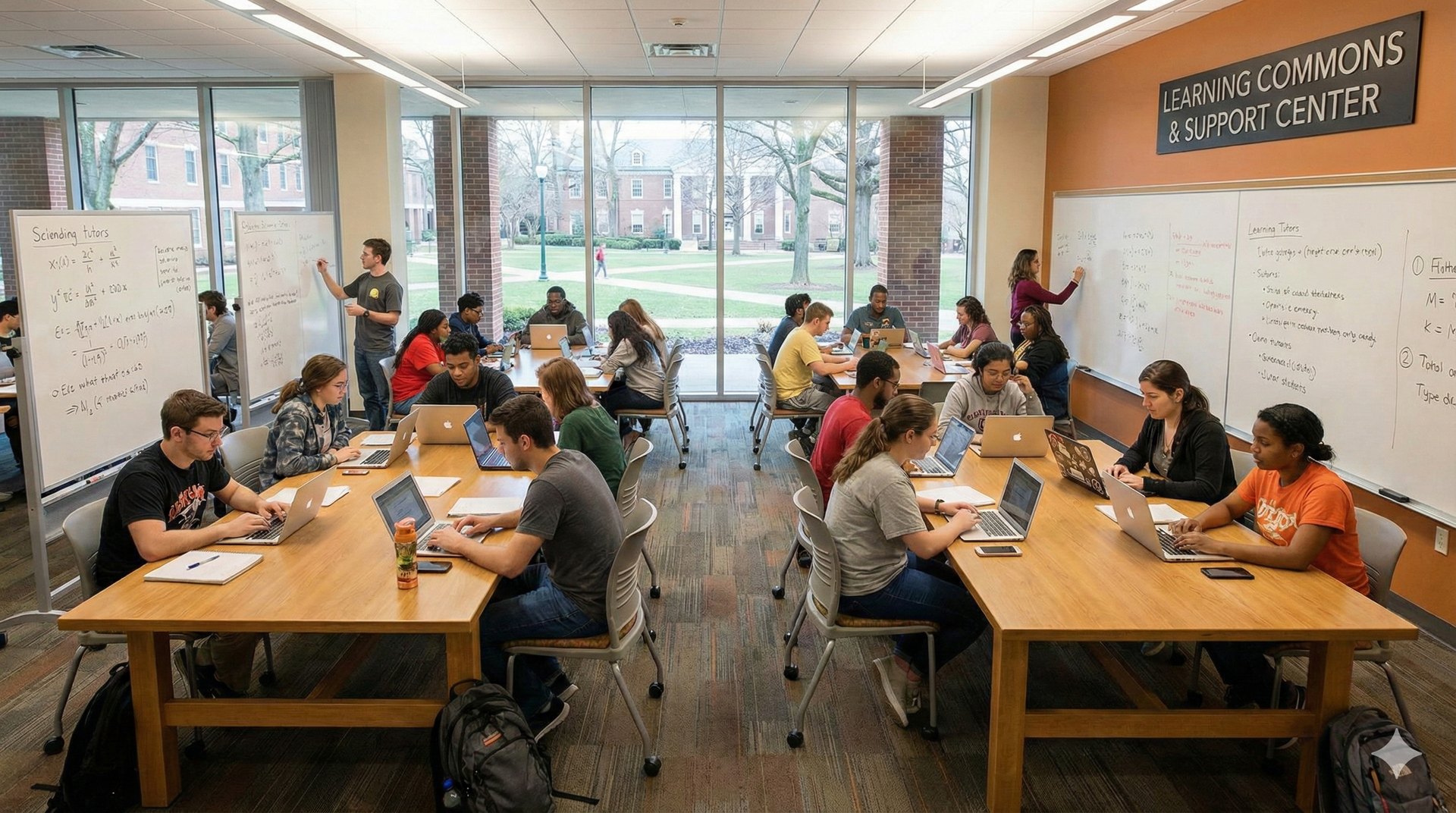
For parents of neurodiverse students, this ambiguity can be terrifying. You don't just need to know if support exists; you need to know if it is enough.
Matching the right amount of support with your teen's current needs is crucial for creating a smoother transition to college. It results in those early "wins" that build the confidence and momentum they need to stick with it.
To help you navigate these options, we have decoded college learning support into four distinct tiers:
Tier 1: Light Support
For the independent student who just needs a nudge.
Some students are ready to handle their coursework independently but still benefit from a safety net to keep their executive functioning on track.
What it looks like: Programs in this tier typically focus on organization, planning, and communication skills rather than heavy content tutoring.
Tier 2: Robust Support
For the high-potential student who needs a dedicated team.
If your student is academically capable but struggles with the unstructured nature of college life, robust support programs offer a more integrated approach.
What it looks like: These programs often combine academic counseling with subject-specific tutoring, executive function support, and social skills support.
Tier 3: Wrap-Around Support
For the student who needs reinforcement in all areas.
Some students need a tightly-knit community where academic, social, and executive challenges are addressed holistically.
What it looks like: In this tier, support is reinforced in all aspects of success. It includes executive functioning instruction, learning strategy integration, life coaching, advising, and monitored study halls.
Tier 4: Full Immersion Support
For the student who needs 24/7 holistic guidance.
For some neurodiverse young adults, the biggest hurdles aren't just in the classroom—they are in the dorm room, the cafeteria, and the community. Some students thrive only when surrounded by holistic support every day.
What it looks like: These programs provide structured living support, life skills mentors, academic coaching, counseling, and campus inclusion assistance.
Our Advice: Lean Toward "Over-Support"
When you are envisioning your teen's freshman year of college, our best advice is to lean toward over-support—especially during that critical first year.
It is far better to start with a robust safety net and scale it back as your student's competencies grow than to realize in November that they have slipped through the cracks. Assessing fit means honestly evaluating your teen's deficits at this transitional moment, not hoping they disappear by September.